

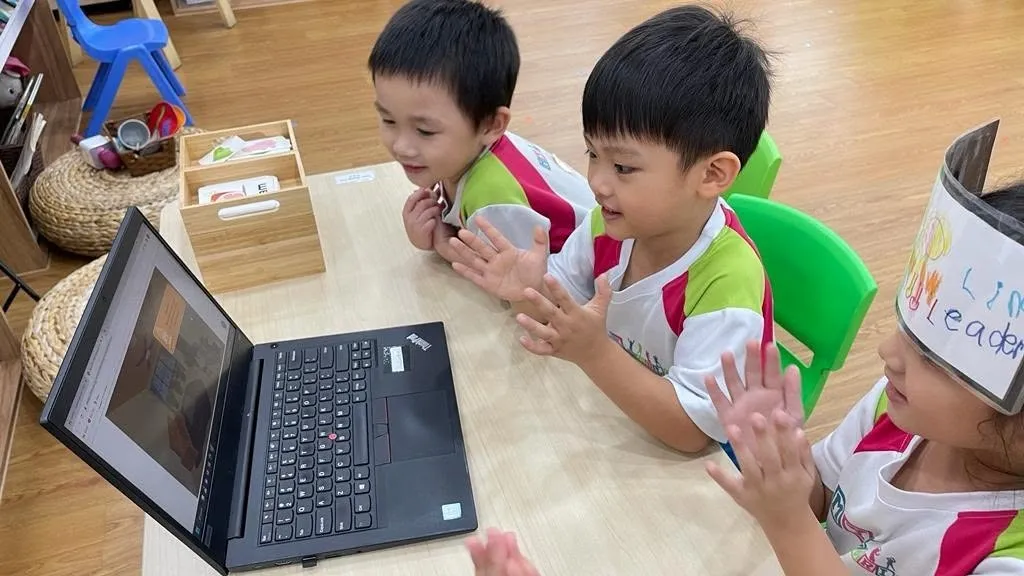
In today’s digital world, screens are a part of everyday life. While experts continue to debate the role of digital devices in early childhood, many agree that content quality, moderation, and caregiver involvement are important factors in helping children develop healthy habits.
At M.Y Preschool, we believe that hands-on play, movement, quality interactions, and in-person relationships remain the foundation of healthy early childhood development. At the same time, thoughtful and limited use of technology may have a place when used intentionally and age-appropriately.
Understanding Current Recommendations
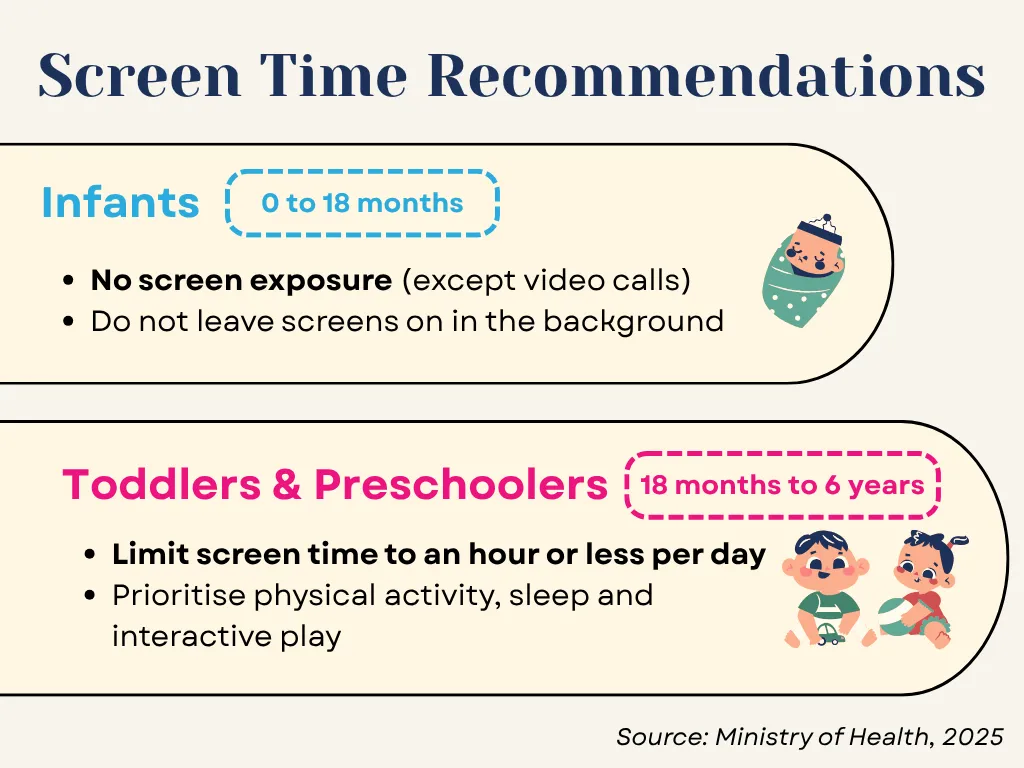
Health organisations around the world generally encourage a cautious approach to screen use during early childhood. Guidelines from the World Health Organization and Singapore’s Ministry of Health recommend avoiding screen exposure during infancy, except for video calls with family members. For toddlers and preschoolers, recreational screen time should be kept to around one hour per day or less.
These recommendations are intended as general guidance rather than strict rules, and families may adapt them differently depending on their circumstances and needs.
Why Moderation Matters
Researchers continue to study how screen use may affect young children’s health and development. Some studies have found associations between excessive screen exposure and:
- Sleep difficulties and reduced physical activity
- Increased sedentary behaviour, which may contribute to long-term health concerns
- Delays in language development and attention skills in some children
- Lower social-emotional engagement when screen use replaces face-to-face interaction and play
At the same time, experts note that children’s outcomes can also be influenced by factors such as family environment, content quality, caregiver involvement, and overall routines.
Content and Context Matter Too
Not all screen experiences are the same. Many researchers and educators believe that the type of content children engage with — and how they engage with it — can make a meaningful difference.
Potentially positive uses of technology may include:
- Age-appropriate educational content
- Interactive activities that encourage problem-solving or communication
- Video calls that help children stay connected with loved ones
- Guided exposure that introduces basic digital literacy skills
However, most experts emphasise that screens are generally most beneficial when they supplement real-world interaction, conversation, reading, and active play.
Practical Tips for Families
Research suggests that healthy screen habits are often shaped by both the amount of screen time and the way technology is used.
| Choose High-Quality Content | Look for age-appropriate, educational, and interactive media rather than passive or fast-paced, overstimulating content. |
| Be Involved | Watching or engaging alongside children can help turn screen time into a more interactive and meaningful experience. |
| Encourage Conversation | Talking with children about what they are watching can support language development and critical thinking. |
| Protect Sleep and Quality Interactions | Ensure that screen use does not regularly interfere with sleep, outdoor activities, family interactions, or unstructured play. |
| Allow for Flexibility | Every family’s situation is different. Occasional flexibility is normal, and healthy digital habits often develop gradually over time. |
The Bottom Line
Screens do not have to be viewed as entirely harmful or entirely beneficial. What matters most is how, why, and how much they are used. We encourage families to stay engaged, set reasonable boundaries, and prioritise real-world interaction alongside technology. In doing so, we can guide our children to develop healthier habits as they navigate this digital era.
Further Reading
Ministry of Health Singapore — Guidance on Screen Use and Healthy Digital Habits for Children